The death of Alexander the Great in 323 BC did not end the changes he set in motion. His generals carved out kingdoms stretching from the Mediterranean to the Indus, while new and refounded cities became hubs of government, trade and learning.
Kingdoms and cities
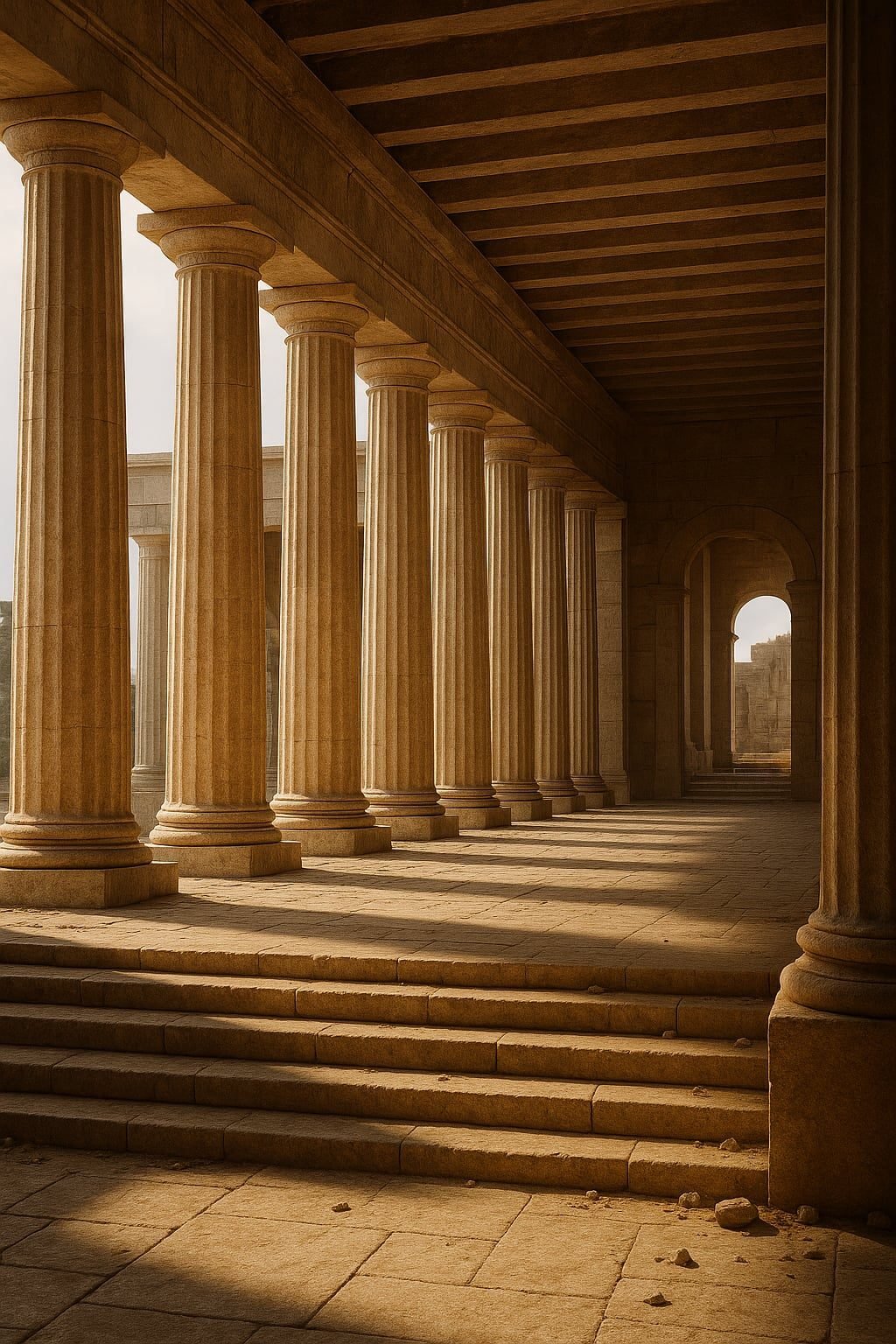
The Ptolemies in Egypt, the Seleucids in Asia, the Antigonids in Macedon and smaller dynasties paid for city projects and monumental architecture. City plans combined grid layouts, theatres, gymnasia and sanctuaries, mixing Greek and local traditions.
Koine and exchange
Koine Greek became a shared language across the region. Coins, weights and measures, and ways of running a state travelled with officials and merchants. Artistic styles blended, from royal portraits to terracottas, while religious life saw ruler cults rise alongside the traditional gods.
Knowledge and collection
Institutions like the Library and Museum of Alexandria pursued scholarship of every kind: poetry, geography, astronomy. Collecting and sorting the past became a form of power in itself, shaping the canons we still inherit.
Further reading
- Peter Thonemann, The Hellenistic Age.
- R. R. R. Smith, Hellenistic Royal Portraits.