Someone will remember us
I say
Even in another time.
L.-P. 147
In the times when Nebuchadnezzar II was plundering Jerusalem, Solon was governing Athens, Phoenician seafarers were exploring the African continent for the first time, and Anaximander was contemplating the origin of all things, Sappho crafted her poetry. Her name, believed to have a Hittite origin, means either “numinous,” “clean,” or “pure source,” or it is a corruption of the ancient Greek word for sapphire and lapis lazuli.
You set me on fire.
L.-P. 38
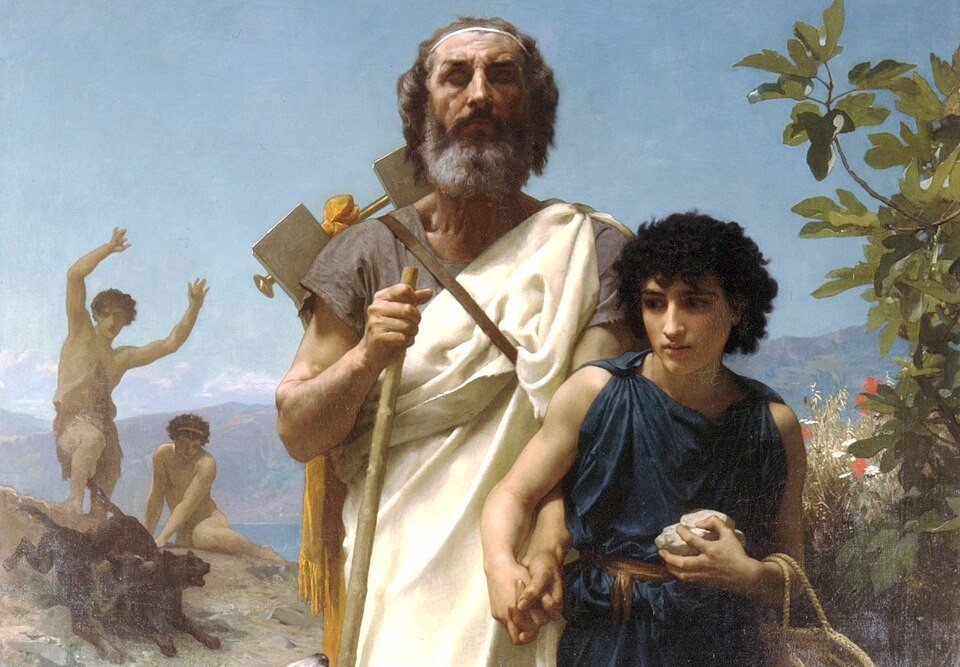
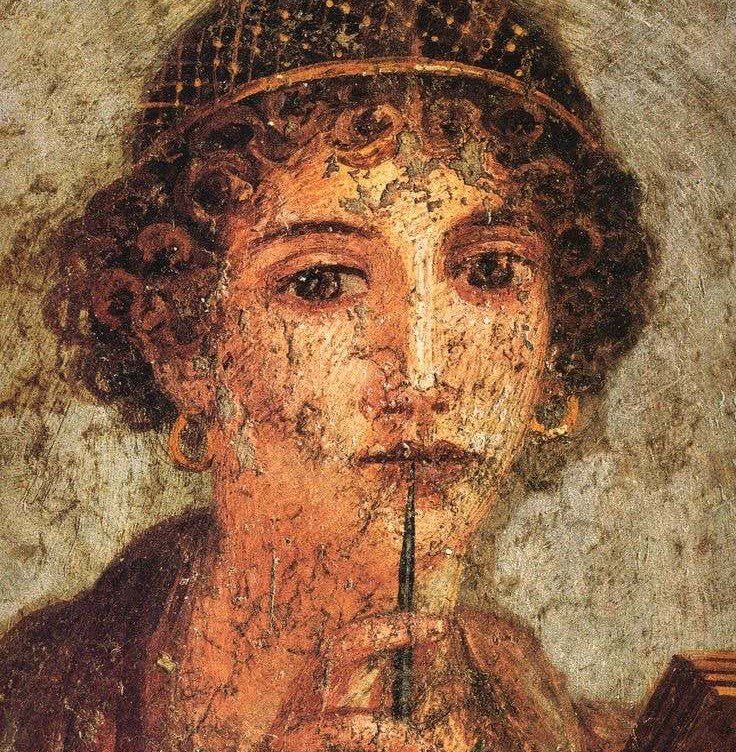
Sappho (c. 630–570 BCE), was one of the greatest lyric poets of ancient Greece, she crafted poetry that lasted across millennia. Sappho lived in the city of Mytiline on the island of Lesbos. She was a musician and a poet and she appears to have devoted her life to composing songs. She was known variously as “the tenth muse” and “the female Homer”. Hellenistic poets called her “the mortal Muse”. Unlike epic poets such as Homer, Sappho wrote lyric poetry, intended to be accompanied by lyre. Her works focus on themes of love, desire, and beauty, emotion, devotion and longing, vulnerability, sorrow and heartbreak.
He seems to me equal to gods
L.-P. 31
In just a handful of lines, Sappho speaks directly to the human heart. Her verses, intensely personal, reflect her inner world and relationships. The intimacy of her verses renders her unique among ancient poets, offering rare insight into the private lives and emotional experiences of women in antiquity, as she is the first surviving female author in the Western tradition.
As a wind in the mountains
assaults an oak,
Love shook my breast.
L.-P. 47
Further Reading
Carson, Anne. “If not, Winter: Fragments of Sappho”, Vigaro Press, 2003.
Center for Hellenic Studies. Selections from Sappho. Harvard University, https://chs.harvard.edu/primary-source/sappho-sb/. Accessed 19 Jan. 2025.
Higgins, Charlotte. "Sappho: the Poet Who Transcends Time." The Guardian, 11 Jan. 2010, https://www.theguardian.com/culture/charlottehigginsblog/2010/jan/11/sappho-poetry-classics. Accessed 19 Jan. 2025.
Schalansky, Judith. "What We Know of Sappho." The Paris Review, 8 Dec. 2020, https://www.theparisreview.org/blog/2020/12/08/what-we-know-of-sappho/. Accessed 19 Jan. 2025.
Wilson, Emily. “Lady of Lesbos.” The Guardian, 2 Feb. 2004, https://www.theguardian.com/books/2004/feb/02/classics. Accessed 19 Jan. 2025.